

The kitchen is the room your family uses every single day, so it is no surprise that it is also the room homeowners most want to upgrade. But before you pick cabinets or tile, you need one answer: how much will it actually cost?
In Connecticut, labor rates, permit rules and material choices all push prices above the national average. This guide breaks down realistic 2026 kitchen remodeling costs, what drives the final number, and how to plan a budget that does not fall apart halfway through the project.
How Much Does a Kitchen Remodel Cost in Connecticut in 2026?
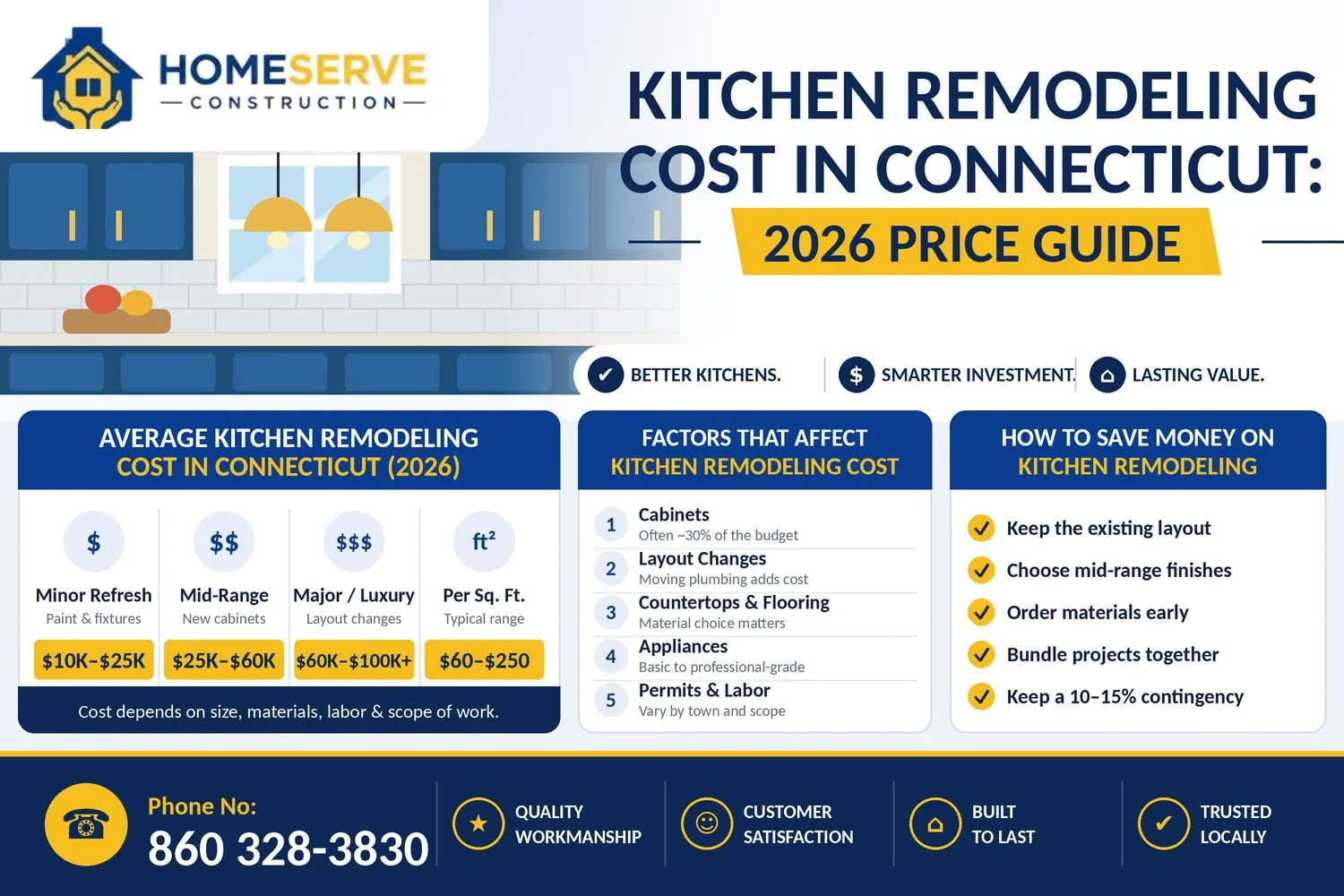
Most Connecticut kitchen remodels fall somewhere between $20,000 and $100,000, depending on size, scope and finishes. Published estimates vary by source, but a mid-range project in the $30,000 to $60,000 range is common for a full remodel of an average-sized kitchen. Per square foot, expect roughly $60 to $250, with most homeowners landing in the middle of that range.
Here is a simple way to think about it:
| Remodel Level | Typical Scope | Estimated Cost Range |
| Minor refresh | Paint, hardware, backsplash, faucet, lighting updates | $10,000 – $25,000 |
| Mid-range remodel | New cabinets, quartz counters, new flooring, appliances, same layout | $25,000 – $60,000 |
| Major or luxury remodel | Layout changes, custom cabinetry, premium stone, high-end appliances | $60,000 – $100,000+ |
These are planning ranges, not quotes. Your final price depends on your home, your town and the choices you make. The only way to get an exact number is a site visit and a written estimate.
What Affects Kitchen Remodeling Cost?
1. Kitchen Size and Layout
A small galley kitchen costs far less to update than a large open-plan space. Keeping your existing layout is the single easiest way to control cost. Moving sinks, gas lines or walls adds plumbing, electrical and structural work, which raises labor costs quickly.
2. Cabinets
Cabinets are usually the biggest line item, often around 30% of the total budget. Stock, semi-custom and fully custom cabinets can differ in price by a huge margin, and door style and material can swing the cabinet cost by well over 30%. If you want a high-end look without the full custom price, semi-custom cabinets are often the best balance. Our carpentry team can also handle built-ins, trim and custom finishing details.
3. Countertops
Laminate is the budget option. Quartz is the most popular mid-range choice because it is durable and low maintenance. Granite and natural stone cost more, and premium slabs with waterfall edges sit at the top of the range.
4. Flooring
Luxury vinyl plank, tile and hardwood all work in kitchens, but their prices and installation costs differ. If you are replacing flooring in the rest of the house too, read our full guide to flooring installation cost in Connecticut so you can plan both together. We also offer professional flooring installation.
5. Appliances
A basic appliance package can cost a few thousand dollars, while professional-grade ranges and paneled refrigerators can cost more than an entire budget kitchen refresh. Decide your appliance list early, because sizes affect cabinet design.
6. Walls, Drywall and Paint
Once old cabinets come out, walls often need patching or repair. Fresh drywall installation and smooth drywall finishing make a huge difference to the final look, and a professional painting finish ties the whole room together.
7. Electrical, Plumbing and Lighting
Updated outlets, under-cabinet lighting, recessed lights and new plumbing fixtures all add cost, but they also improve safety and everyday use. Older Connecticut homes often need electrical upgrades to meet current code.
8. Permits and Local Rules
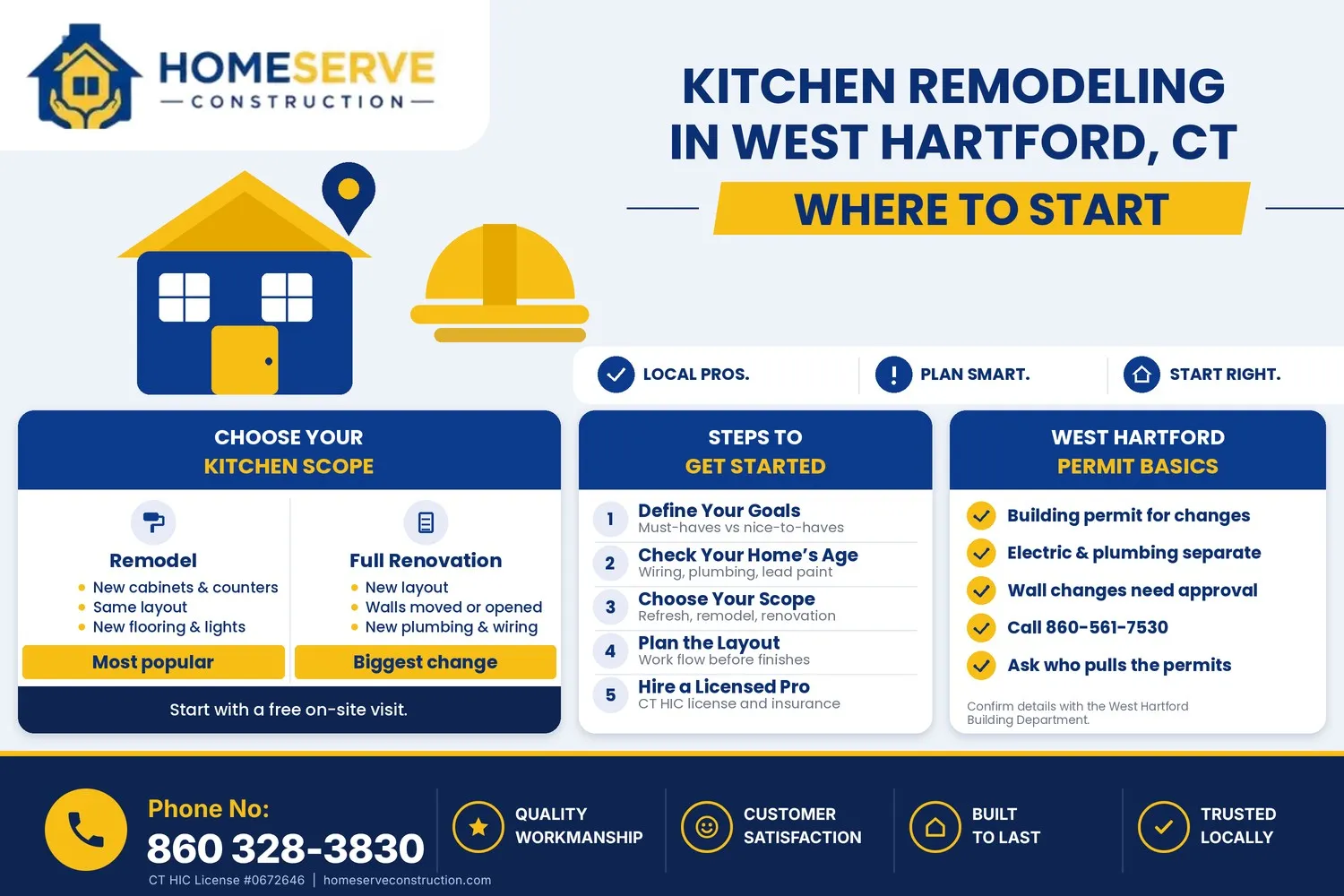
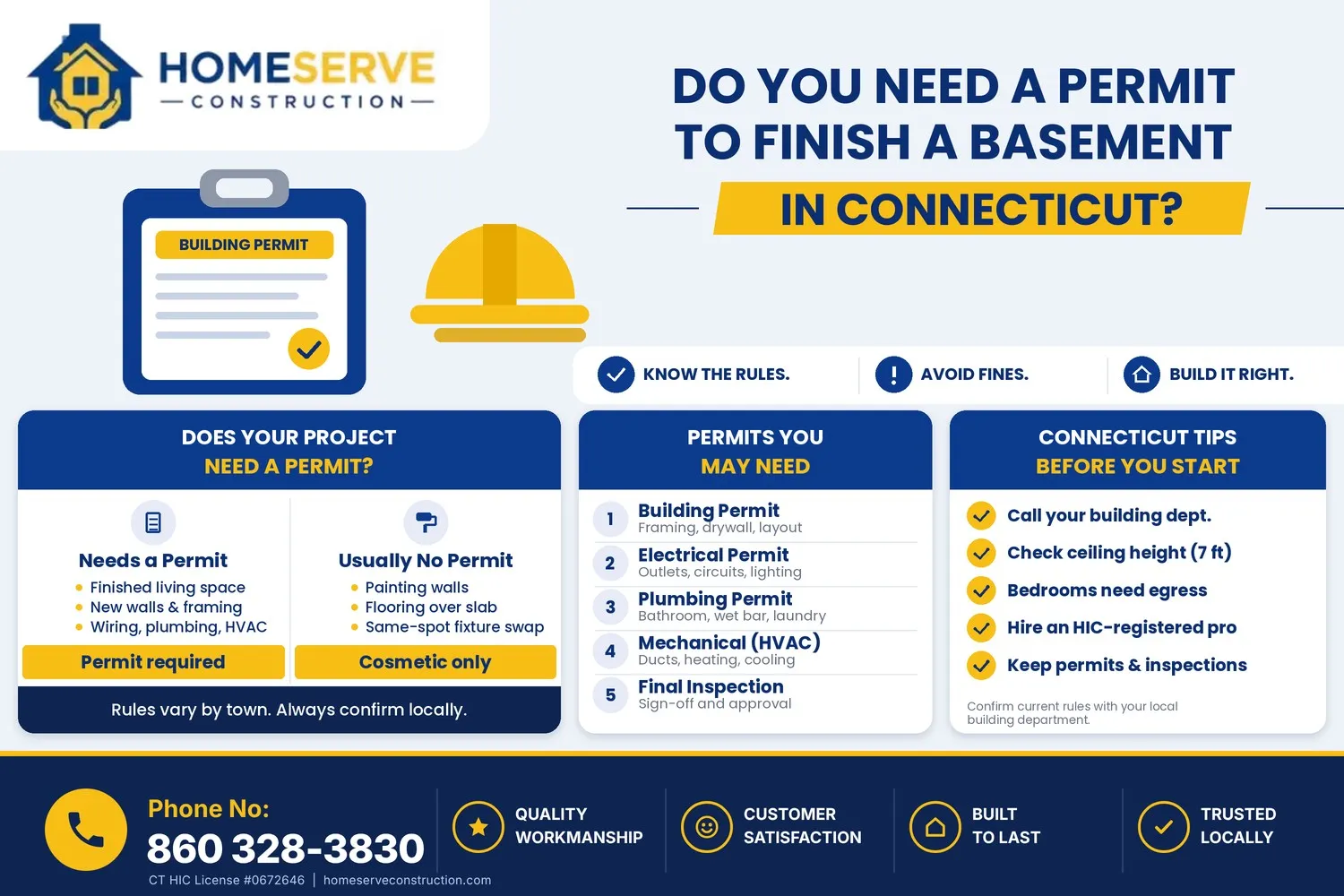
Permit requirements and fees vary by town and by scope. A simple cosmetic update may not need much, while moving walls, plumbing or gas lines usually does. Always confirm requirements with your local building department, and make sure your contractor is licensed and insured.
9. Labor
Connecticut labor costs are higher than the national average, and labor is a major share of the budget, especially when several trades are involved. A well-managed project with one coordinated team avoids delays and costly rework.
Kitchen Remodel Cost Breakdown
While every project is different, budgets often split roughly like this:
| Category | Approximate Share of Budget |
| Cabinets and hardware | 25% – 35% |
| Labor and installation | 15% – 25% |
| Appliances | 10% – 15% |
| Countertops | 8% – 12% |
| Flooring | 5% – 8% |
| Lighting, electrical and plumbing | 5% – 10% |
| Backsplash, paint and finishes | 3% – 6% |
| Permits, disposal and extras | 3% – 5% |
Use this as a guide, not a rule. A kitchen with stone counters and custom cabinets will shift the percentages.
Hidden Costs Homeowners Forget
The quoted price is not always the final price. Plan for these:
- Surprise repairs: water damage, old wiring or uneven subfloors are often found only after demolition.
- Temporary kitchen setup: you may spend more on takeout and meals while the kitchen is out of use.
- Disposal and delivery fees: removing old cabinets and appliances is not free.
- Design changes mid-project: every change order adds time and money.
A smart rule is to keep a contingency fund of 10% to 15% on top of your budget. Extras can add 5% to 15% to a project if you do not plan for them up front.
How Long Does a Kitchen Remodel Take?
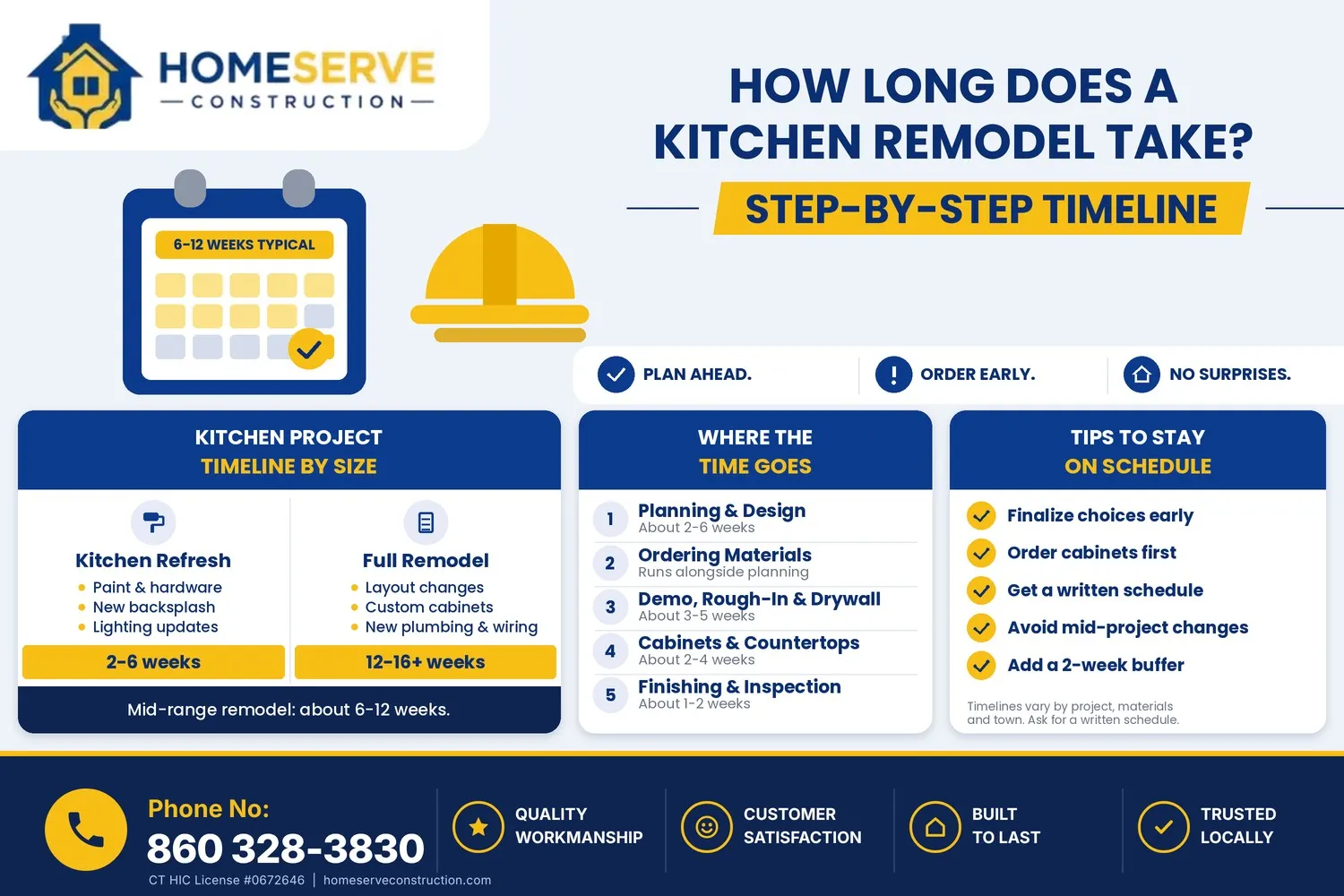
A medium-sized kitchen remodel often takes around 6 to 8 weeks once work starts, but custom cabinets and special-order materials can add weeks of lead time before that. Ordering early is the best way to keep the schedule on track.
How to Save Money on Your Kitchen Remodel
You do not have to compromise on quality to stay on budget. These strategies work well:
- Keep the layout. Moving plumbing and gas lines is expensive.
- Reface or paint cabinets if the boxes are in good shape.
- Choose mid-range finishes in most areas and splurge on one feature you truly love.
- Order materials early to avoid rush fees and delays.
- Bundle projects. If you are also renovating other areas, combining work can reduce mobilization time. Our compound services are built for exactly that.
- Use one coordinated contractor instead of managing separate trades yourself.
If you are planning outdoor or lower-level upgrades at the same time, our guides to deck cost in Connecticut and basement finishing cost in Connecticut can help you budget the bigger picture. Thinking about the bathroom next? Here is how to install a bathroom vanity.
Is a Kitchen Remodel Worth It in Connecticut?
For most homeowners, yes. A well-planned kitchen improves daily comfort, storage and energy efficiency, and it is one of the upgrades buyers notice first when a home goes on the market. The best return usually comes from smart, mid-range updates that fit the style of your home, rather than over-building for the neighborhood.
Why Work With a Local Connecticut Contractor?
A local team understands Connecticut building codes, town permit processes, older home construction and seasonal scheduling. Homeserve Construction is a licensed and insured contractor (CT HIC License #0672646) serving homeowners across the area, and you can see our finished projects in our work portfolio and read what customers say on our reviews page. You can also check the areas we serve to see if we cover your town.
Frequently Asked Questions
How much does a small kitchen remodel cost in Connecticut?
A small kitchen refresh with new counters, hardware, paint and lighting often falls between $10,000 and $25,000, while a full remodel of a small kitchen usually costs more because cabinets and labor still apply.
What is the most expensive part of a kitchen remodel?
Cabinets are typically the largest single cost, followed by labor and appliances.
Do I need a permit to remodel my kitchen in Connecticut?
It depends on your town and the scope of work. Structural, plumbing, gas and electrical changes usually require permits. Check with your local building department or ask your contractor to confirm.
How long does a kitchen remodel take?
Plan for about 6 to 8 weeks of construction for a medium-sized kitchen, plus lead time for cabinets and materials.
Can I stay in my home during a kitchen remodel?
Most homeowners do, using a temporary cooking setup in another room. Good planning and clear communication with your contractor make this much easier.
Should I hire a general contractor or handle trades myself?
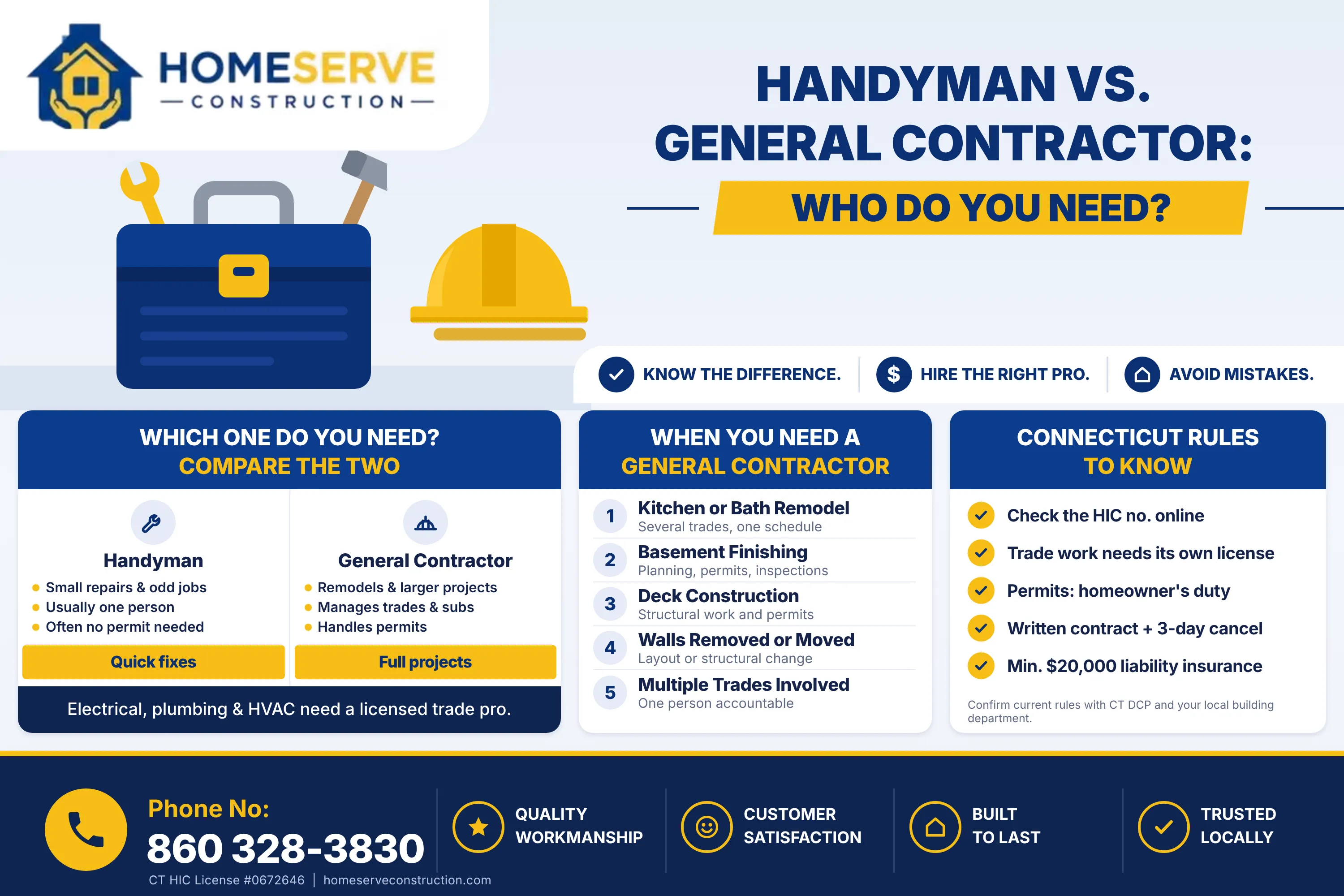
A single contractor who coordinates carpentry, drywall, painting, flooring and finishing usually saves time, reduces mistakes and gives you one point of responsibility. For smaller fixes along the way, our handyman services can help too.
Ready to Plan Your Kitchen Remodel?
Every kitchen is different, and the best way to know your real cost is a detailed estimate based on your space and goals. Learn more about our kitchen remodeling services in West Hartford and across Connecticut, then contact us for a free, no-obligation estimate. No hidden fees, no surprises.